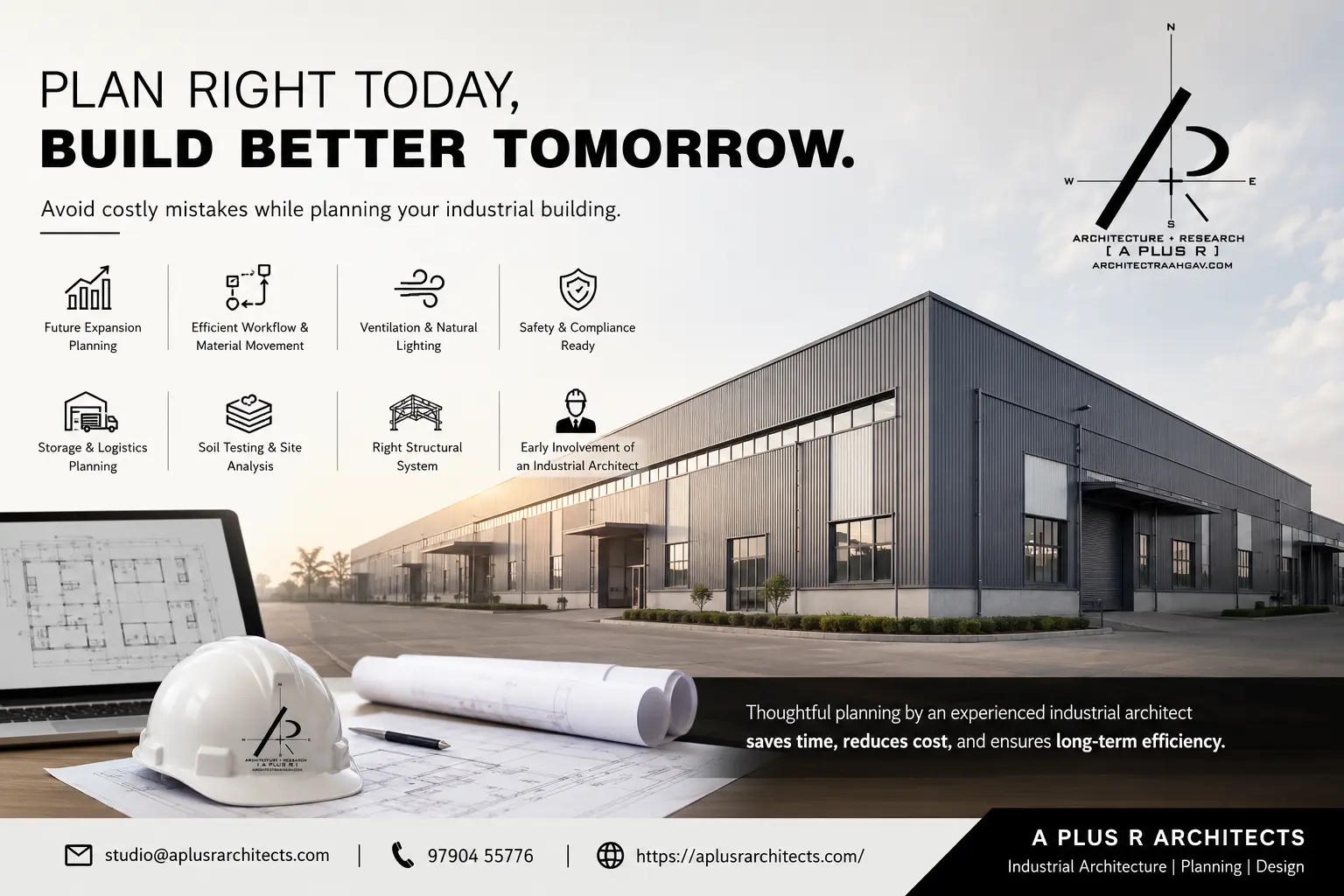
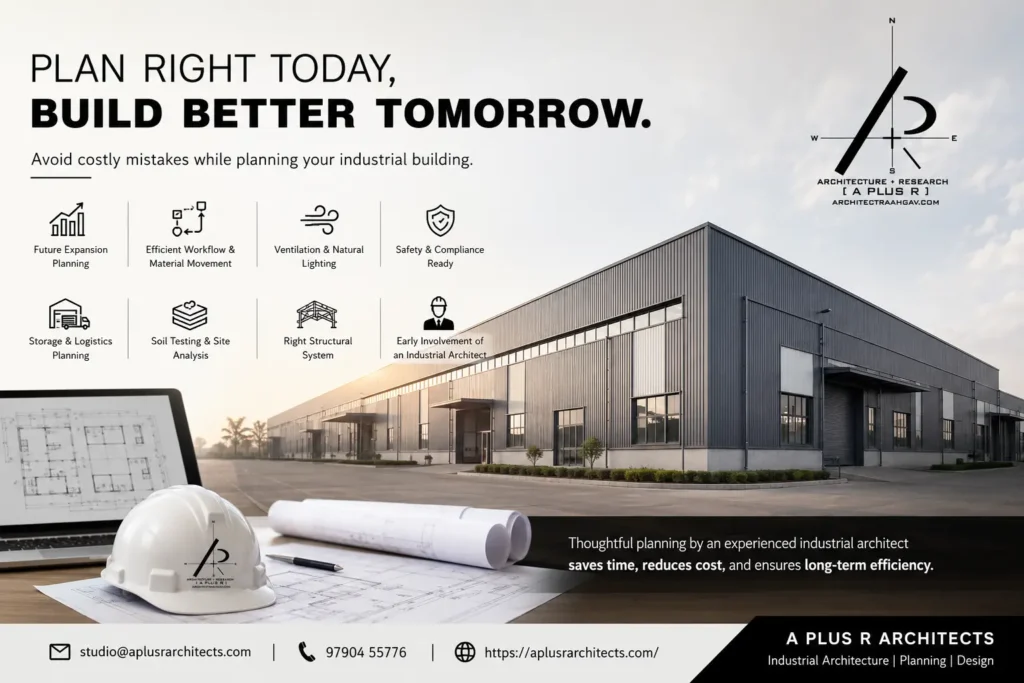
Industrial architects in Coimbatore play an important role in helping businesses plan factories, warehouses, and industrial facilities more efficiently. Planning an industrial building involves more than construction alone — poor early decisions can affect workflow, ventilation, logistics, future expansion, and operational performance.
Many businesses focus mainly on land purchase, machinery, and construction budget while overlooking proper planning. However, expensive industrial problems often begin during the early stage itself.
At A Plus R Architects, we have observed that thoughtful planning can significantly improve long-term efficiency while helping businesses avoid costly redesign work later.
In this guide, we discuss the 10 costly mistakes businesses should avoid while planning an industrial building in Coimbatore.
Why Industrial Architects in Coimbatore Matter for Factory Planning
Industrial buildings are very different from residential or commercial projects. A factory or warehouse directly impacts operational efficiency, material flow, worker movement, logistics planning, and long-term expansion.
Poor planning can lead to:
- Congested loading areas
- Workflow bottlenecks
- Storage limitations
- Poor ventilation
- Safety issues
- Increased maintenance cost
- Expensive future modifications
This is why many businesses work with experienced industrial architects in Coimbatore during the early planning stage to improve operational performance and long-term scalability.
1. Ignoring Future Expansion Planning
One of the biggest industrial building mistakes is planning only for current requirements.
Many industrial facilities expand within a few years due to production growth, additional machinery, or storage demand. Without expansion planning, businesses may face expensive redesign work later.
Common Problems
- Space limitations
- Utility relocation
- Workflow disruption
- Limited truck movement
- Structural modification cost
Better Approach
An experienced industrial architect often plans flexible layouts, utility provisions, and future expansion zones during the initial phase itself.
2. Poor Factory Workflow and Material Movement Planning
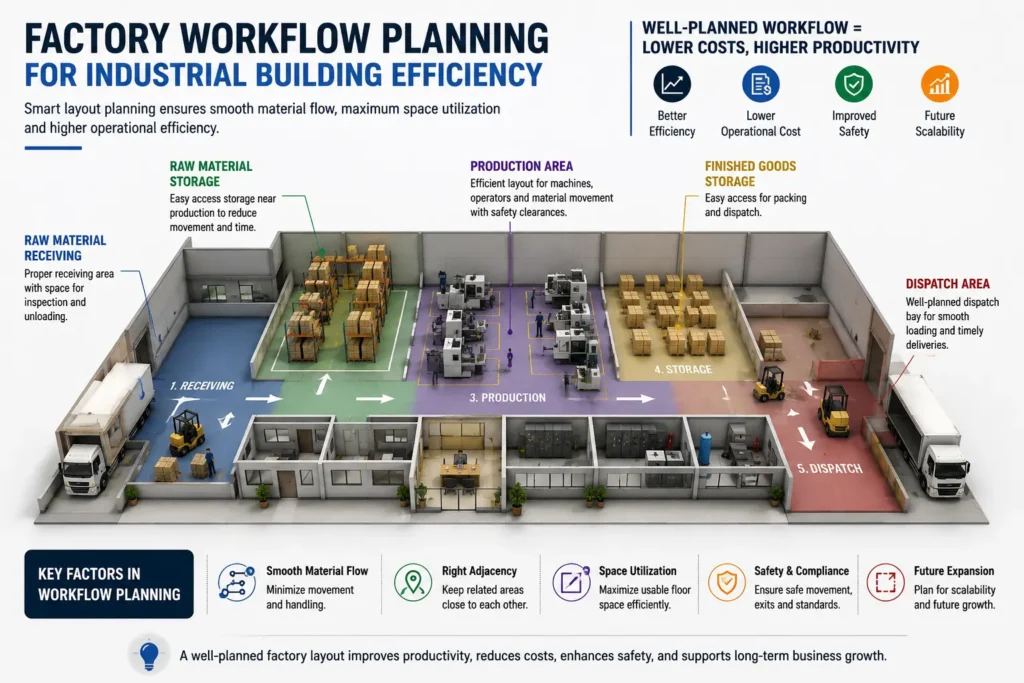
Poor workflow planning can reduce operational efficiency significantly.
Many industrial buildings are designed without properly analyzing:
- Material movement
- Production flow
- Worker circulation
- Truck access
- Dispatch planning
This often creates bottlenecks and operational delays.
Better Approach
A properly planned industrial facility should support smooth movement between:
- Raw material storage
- Production area
- Packaging zone
- Finished goods storage
- Dispatch section
At A Plus R Architects, workflow planning is often studied early to improve operational efficiency and reduce long-term movement challenges.
3. Choosing the Wrong Site Without Proper Analysis
Many businesses choose industrial land mainly based on price without properly evaluating site suitability.
However, site selection directly affects logistics, drainage, truck movement, and utility planning.
Important Factors to Check
- Heavy vehicle access
- Soil condition
- Water availability
- Road connectivity
- Industrial zoning
- Future expansion possibility
Better Approach
Before finalizing land, businesses should assess long-term operational suitability rather than focusing only on land cost.
4. Poor Ventilation and Natural Lighting Planning
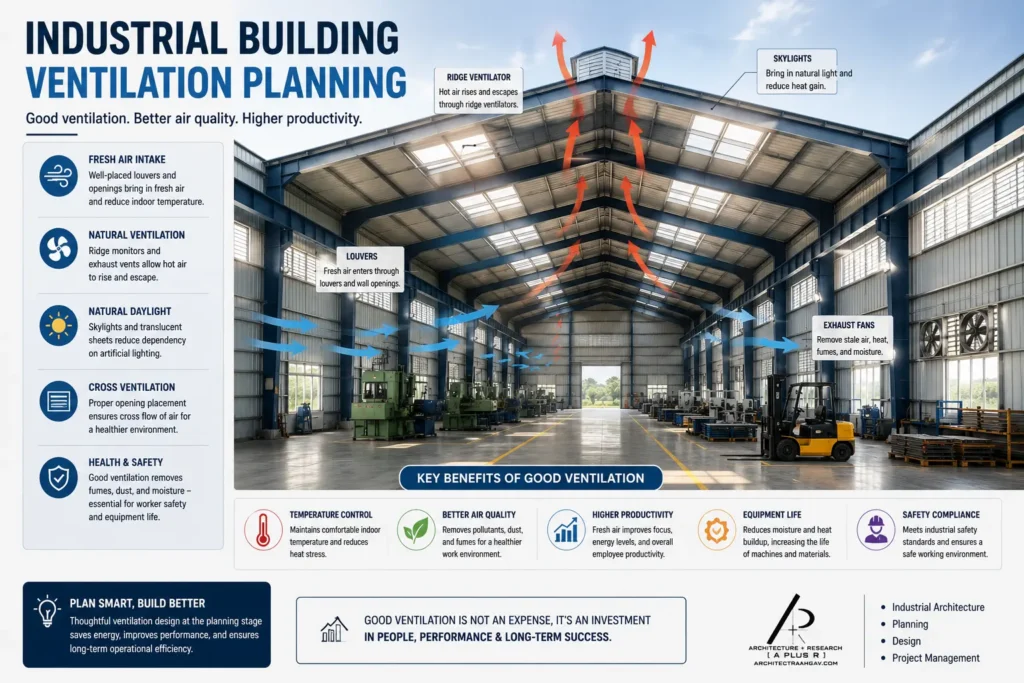
Ventilation is one of the most overlooked areas in industrial design.
Factories generate heat, dust, and humidity. Poor ventilation can create worker discomfort and increase cooling expenses.
Common Problems
- Heat buildup
- Poor air circulation
- Higher electricity cost
- Worker discomfort
- Reduced productivity
Better Approach
Experienced industrial architects in Coimbatore often consider climate, natural airflow, skylights, and ventilation zoning during industrial planning.
5. Ignoring Fire Safety and Compliance Requirements
Safety planning should never be delayed in industrial projects.
However, many businesses focus mainly on production space while overlooking compliance requirements.
Common Mistakes
- Improper emergency exits
- Unsafe storage layouts
- Poor evacuation planning
- Inadequate fire access
Better Approach
Industrial planning should include safety and compliance considerations during the early design phase itself to reduce approval issues later.
For industrial approvals and investment guidance in Tamil Nadu, businesses can also refer to:
6. Underestimating Construction Cost and Hidden Expenses
Many businesses estimate only the construction cost and overlook infrastructure expenses.
Hidden costs may include:
- Drainage systems
- Internal roads
- Fire systems
- Utility infrastructure
- Site development
Better Approach
A realistic project budget should include both construction and operational infrastructure costs from the beginning.
7. Poor Storage and Logistics Planning
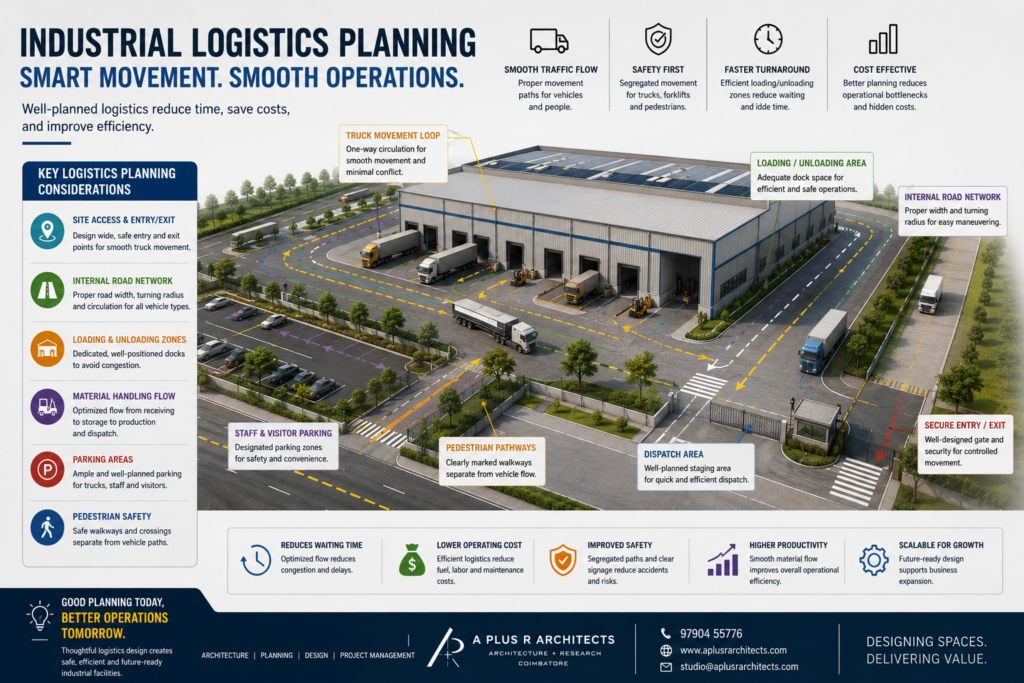
Storage and logistics directly affect industrial efficiency.
Poor planning often creates:
- Congested loading areas
- Limited truck movement
- Storage shortages
- Dispatch delays
Better Approach
Many industrial architects in Coimbatore recommend separate planning for:
- Raw material storage
- Finished goods storage
- Truck circulation
- Loading/unloading areas
This improves long-term operational flow.
8. Ignoring Soil Testing and Site Conditions
Skipping soil testing to save cost is a major industrial planning mistake.
Poor soil understanding can result in:
- Structural cracks
- Uneven flooring
- Foundation settlement
- Drainage problems
Better Approach
Before construction begins, businesses should conduct:
- Soil testing
- Site drainage evaluation
- Groundwater analysis
- Geotechnical studies
9. Choosing the Wrong Structural System
Many businesses choose structural systems based only on budget.
However, choosing between:
- PEB structures
- RCC structures
- Hybrid systems
depends on project needs.
Better Approach
An experienced industrial architect evaluates future expansion, machinery load, maintenance, and operational flexibility before recommending a structural system.
10. Hiring an Industrial Architect Too Late
One of the biggest mistakes businesses make is involving an industrial architect only after major decisions are finalized.
By then, businesses may face:
- Workflow inefficiencies
- Space limitations
- Utility planning problems
- Costly redesigns
Better Approach
Businesses should ideally involve industrial architects in Coimbatore during:
- Site selection
- Layout planning
- Workflow planning
- Expansion planning
At A Plus R Architects, early-stage industrial planning helps businesses reduce costly mistakes and improve long-term operational efficiency.
Quick Industrial Building Planning Checklist
| Planning Area | Key Consideration |
|---|---|
| Site Selection | Truck access & utilities |
| Workflow | Smooth material movement |
| Expansion | Future growth planning |
| Ventilation | Worker comfort |
| Logistics | Storage & dispatch |
| Safety | Fire compliance |
| Structure | PEB vs RCC suitability |
| Soil | Foundation stability |
Conclusion
Planning an industrial building in Coimbatore requires more than construction alone. Workflow, ventilation, logistics, safety, and future expansion all affect long-term operational performance.
Many costly industrial problems begin during the planning stage itself. Working with an experienced industrial architect early can help businesses avoid expensive mistakes and improve long-term efficiency.
Businesses looking for industrial architects in Coimbatore can explore more about our planning approach here:
Frequently Asked Questions
Why should businesses hire industrial architects in Coimbatore?
What does an industrial architect do?
What is the biggest mistake in industrial building planning?
When should businesses hire an industrial architect?
What factors should businesses check before planning an industrial building?
- Site suitability
- Workflow requirements
- Expansion potential
- Ventilation
- Safety compliance
- Structural system
- Utility planning